Protein Myths and Facts: What Your Body Actually Needs
How much do you need and where should you get it from?
Protein is in the news a lot these days. We see it being added to a host of processed foods in an attempt to make them seem healthier. Take a trip to the grocery store and you can find chips that are protein enhanced, breads and cereals that have added protein and frozen waffles as well as protein-enriched water and milk. Pea protein, whey and soy are the most common types of protein added to processed foods. But they are often accompanied by added sugars, artificial ingredients and refined carbohydrates making them less than ideal options for meeting your protein goals.
The new USDA Dietary Guidelines emphasize protein at every meal. As a holistic nutritionist, I consider this very good news. In my private practice, I often see clients report inadequate protein intake, especially at breakfast.
This new focus on protein doesn’t mean we need to be eating steak three times a week. There are plenty of whole food sources of protein that are not high in saturated fat, a nutrient that is best limited to 10% of total calories, or less than 20 gram per day.
And protein IS important, especially as we age. We typically think of protein for its role in building muscle. But protein is also important for our structural health – bones – as well as hair, skin and nails. We need protein to make enzymes that assist with digestion, blood clotting and DNA replication. Protein is key in synthesizing hormones (think insulin and thyroid hormones). And it’s critical to our immune system. Antibodies rely on adequate protein intake.
So how much protein do you need in a day and where should it come from?
This is a conversation I have frequently with my clients. Protein needs aren’t a one-size-fits-all recommendation. Needs vary depending on both body weight and physical activity level. And I recommend protein from whole food sources versus from processed foods with supplement protein.
Sedentary - 0.8 g per kg of body weight
Moderately active - 1.0 to 1.5 g per kg of body weight
Athletic or seeking to build muscle - 1.6 to 2 g per kg of body weight
Obese individuals should use their ideal weight as the basis for protein need to avoid unnecessary extra calories. Women who are pregnant or nursing will have increased protein needs. And those recovering from surgery have increased protein needs during the healing process.
Whole food sources are ideal for getting your fill of protein. Limiting processed foods reduces your intake of added sugars, artificial ingredients and poor-quality nutrients. See the chart below for some common whole food protein options.
Here are a couple of myths about protein intake that are worth debunking.
Myth: High protein diets damage your kidneys.
Fact: A high protein diet would be considered intake above the appropriate range for your weight and activity level. That being said, if you have preexisting kidney disease, your doctor may modify your recommended protein intake.
Myth: Older adults don’t need as much protein since they typically eat less.
Fact: Protein intake for older adults is especially important due to muscle loss. Muscle loss begins in our 30s and accelerates in our 50s. Adequate protein intake – as well as strength training – is necessary to counteract this decline in muscle mass. This underscores the need for quality protein at each meal throughout the day.
Finding your protein range and high quality protein foods
The body weight chart below represents protein ranges for moderately active adults. I’ve already converted kilograms of weight to pounds to make it easier to find your target range.
The food chart below provides examples of common natural protein sources. For reference, three ounces of poultry or red meat is about the size of a deck of playing cards. In general, the leaner cuts of poultry and red meats will have slightly more protein than the cuts that are higher in fat. For example, three ounces of chicken breast will have 25 grams of protein whereas the same weight of chicken thighs will have 21 grams of protein. The same goes for red meats – beef and pork.
Body Weight Daily Protein Goal
110 lbs. 50 - 80 g
121 lbs. 55 - 88 g
132 lbs. 60 - 96 g
143 lbs. 65 - 104 g
154 lbs. 70 - 112 g
165 lbs. 75 - 120 g
176 lbs. 80 - 128 g
187 lbs. 85 - 136 g
198 lbs. 90 - 144 g
209 lbs. 95 - 152 g
220 lbs. 100 - 160 g
231 lbs. 105 - 168 g
243 lbs. 110 - 176 g
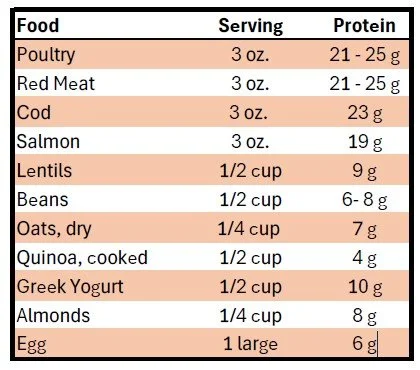
Sample Protein Chart